
Boxing vs Kickboxing: Which Should a Beginner Choose?
By Limitless Martial Arts, Southampton
Published
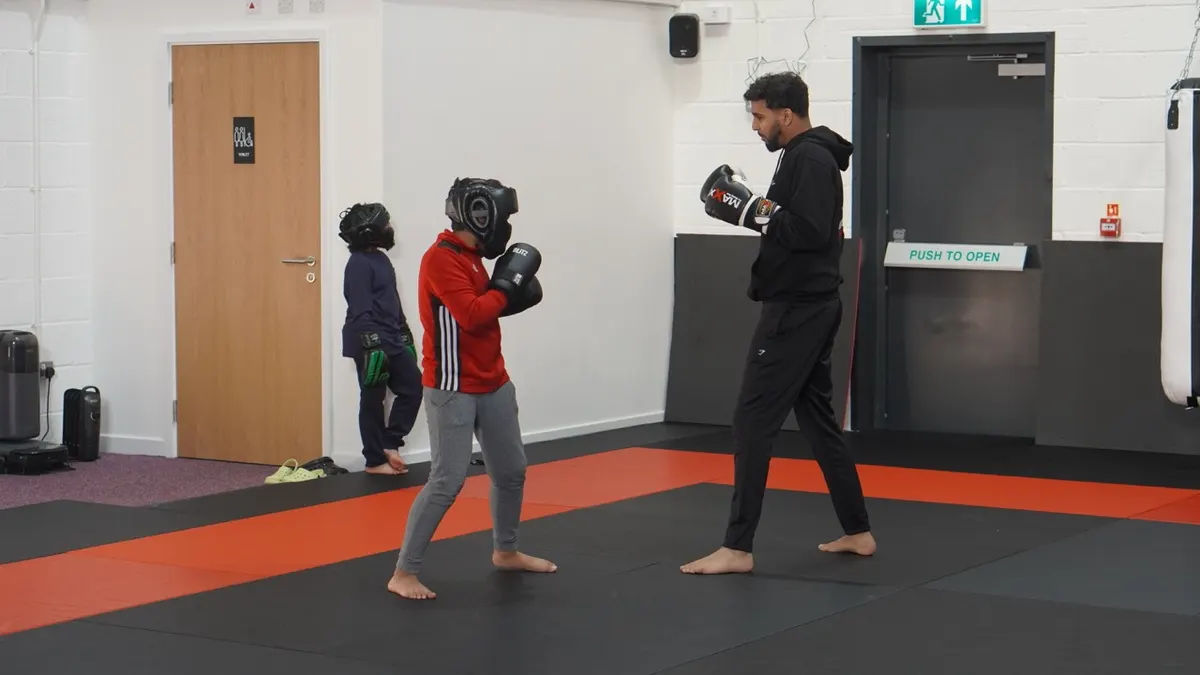
Boxing and Kickboxing both develop striking skills and fitness, but they are not interchangeable. Boxing concentrates on punches, footwork and upper-body defence. Kickboxing adds kicks and, depending on the rules, other striking tools.
A beginner can start either discipline without previous experience. The right choice depends on which skills interest you and which class you can attend consistently.
What does Boxing focus on?
Boxing develops stance, movement, punching combinations, distance and defence. Because the permitted striking tools are narrower, students can spend substantial time refining how the hands, feet and head movement connect.
Classes may include shadowboxing, pads, bags, partner drills and conditioning. Joining does not mean a beginner must compete or enter hard sparring.
What does Kickboxing add?
Kickboxing combines punches with kicks and may include knees or clinch work according to the programme. Students learn to manage a wider striking distance and coordinate attacks from both the upper and lower body.
The additional techniques create variety but also give a beginner more movements to learn.
Which is easier to start?
Neither is universally easier. Boxing has fewer categories of strike, but effective footwork and defence remain highly technical. Kickboxing has more weapons, while some beginners find kicking movements intuitive and enjoyable.
Good instruction matters more than choosing the discipline that appears simplest.
Which is better for fitness?
Both can provide demanding cardiovascular and muscular work. Boxing rounds involve repeated footwork and punching; Kickboxing recruits the legs through kicks, checks and broader movement.
The better fitness choice is normally the class you enjoy enough to attend regularly. Neither programme guarantees a particular weight or fitness outcome.
Which has more contact?
Contact depends on the class rather than only the discipline. Both can be taught through pads and controlled drills, and both can include sparring for suitable students.
Ask how beginners progress, what protective equipment is required and whether recreational students can train without competing.
What about flexibility?
Kickboxing uses a wider range of hip and leg movement, but beginners do not need extreme flexibility. Technique and mobility develop gradually.
Boxing also requires mobility through the ankles, hips, trunk and shoulders even though kicks are not used.
Which is better for self-defence?
Both develop distance, reactions and striking fundamentals, but no combat sport guarantees safety in an uncontrolled situation. Avoidance, awareness and judgement remain essential.
Training against appropriate resistance can help students understand pressure, but this should be introduced safely.
Can you train both?
Yes. Boxing can sharpen punching mechanics and footwork, while Kickboxing expands the striking range. New students may find it easier to establish one reliable weekly routine before adding another class.
How the first month may feel
Boxing beginners commonly spend their first weeks learning stance, the jab, basic combinations and how to move without crossing their feet. Kickboxing beginners add foundational kicks and learn how returning the leg safely affects balance.
Feeling uncoordinated initially is normal in either class. Progress may first appear as better balance, less tension and an improved ability to follow combinations rather than dramatic increases in power.
Common beginner mistakes
- Trying to generate maximum power before developing balance.
- Holding the breath through combinations.
- Buying equipment before confirming class requirements.
- Comparing a first lesson with experienced students.
- Assuming that every partner drill is hard sparring.
What should you wear?
Comfortable sportswear and water are normally enough for an initial session. Ask whether gloves can be borrowed and whether hand wraps, shin guards or a mouthguard are required.
Choosing a Southampton class
- Choose Boxing if you want to specialise in punches, footwork and Boxing defence.
- Choose Kickboxing if you want to combine hand and leg strikes.
- Choose the timetable and coaching environment you can attend consistently.
Limitless offers both Boxing classes and Kickboxing classes in Southampton. Compare current sessions on the live timetable and use the seven-day trial to experience the coaching before deciding.
Side-by-side beginner comparison
- Main weapons: Boxing uses punches; Kickboxing combines punches and kicks.
- Typical range: Boxing specialises in punching distance; Kickboxing also manages kicking range.
- Lower-body demand: both use the legs for movement, while Kickboxing additionally requires repeated kicking and checking actions.
- Equipment: both may use gloves and wraps; Kickboxing may also require shin guards.
- Learning focus: Boxing offers deeper early specialisation in the hands; Kickboxing introduces a broader striking toolkit.
Which suits limited training time?
If you can attend only one or two sessions a week, choose the discipline whose timetable you can maintain and whose techniques interest you most. Boxing's narrower rules do not make it simplistic, and Kickboxing's variety does not automatically produce better fitness.
Changing disciplines repeatedly can slow early familiarity. Give a suitable class enough consistent visits before deciding that you chose incorrectly.
Questions to ask during a trial
- Did the coach explain the stance and safety rules?
- Was the pace manageable for a complete beginner?
- Were contact and sparring expectations clear?
- Did the class teach technique as well as provide exercise?
- Can you realistically attend the session every week?
Frequently asked questions
Do I need to be fit before starting?
No. Begin at an appropriate pace and allow regular training to develop fitness.
Which burns more calories?
Energy expenditure varies with body size, session content and intensity. Choosing solely from a general calorie estimate is unlikely to produce the best long-term decision.
Can women attend both classes?
Yes. Beginner suitability should be based on experience and goals, not gender.